World Health Organization (WHO) – Operational Framework for Building Climate Resilient Health Systems
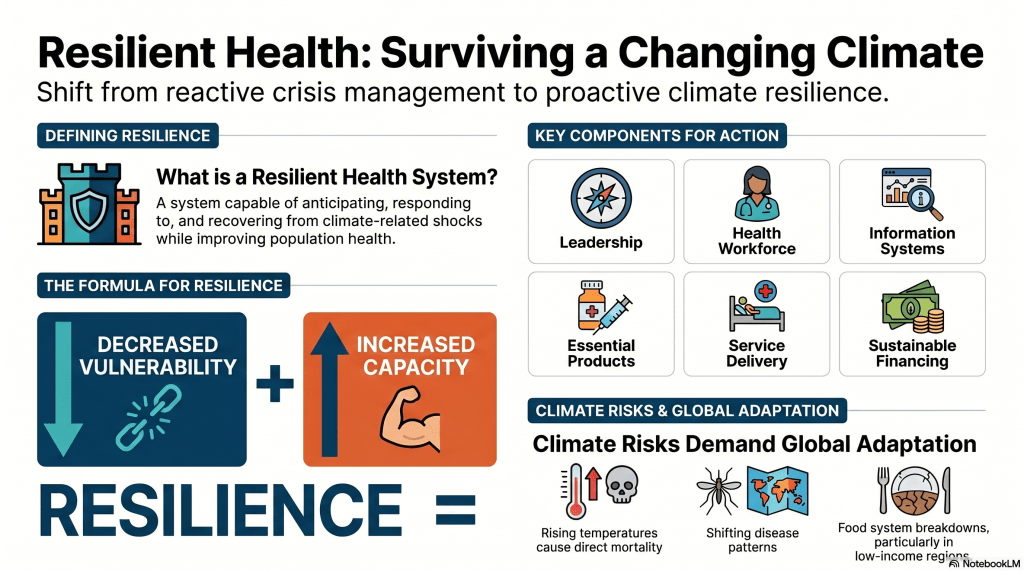
The World Health Organization (WHO) has introduced an operational framework to help countries build climate-resilient health systems. The publication outlines ten essential components for strengthening medical infrastructure, from leadership and governance to emergency preparedness, ensuring healthcare remains functional despite environmental instability. It provides a public health rationale for urgent action, noting that shifting weather patterns exacerbate malnutrition, heat stress, and infectious diseases. By integrating climate data into health policy, the framework aims to reduce population vulnerability and protect the most at-risk groups in a changing environment. Ultimately, these guidelines assist public health managers in creating sustainable systems capable of anticipating and recovering from climate-related shocks.
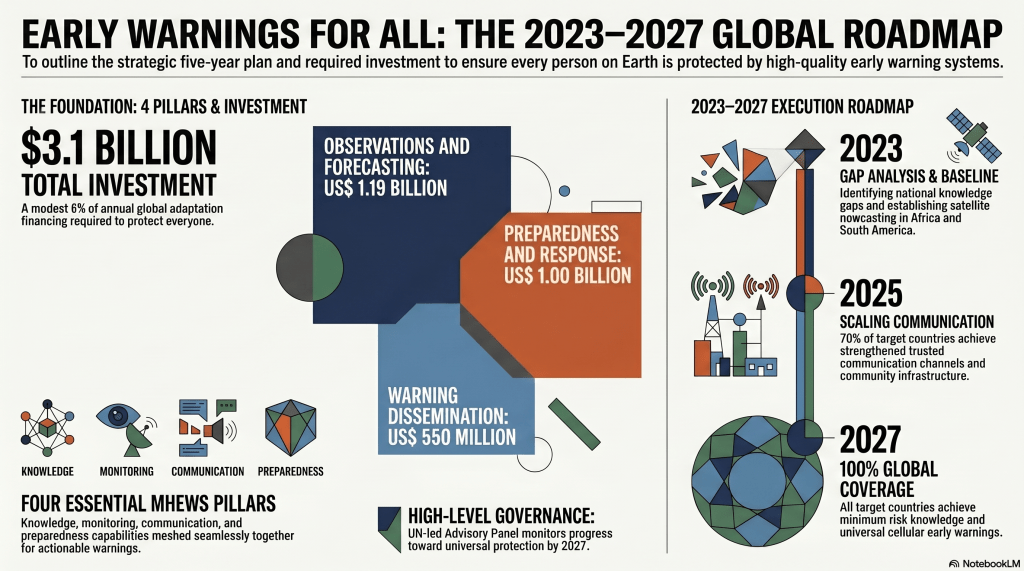
World Meteorological Organization; Early Warnings for All: Executive Action Plan 2023–2027
Integrating AI-enabled neurological risk forecasting into Early Warning Systems (EWS) leverages the “Early Warnings for All” (EW4All) framework to transition from general hazard warnings to highly specific, people-centered health alerts. By adopting the Executive Action Plan’s 2026 milestone to develop Artificial Intelligence tools for scaling up actionable alerts, systems can process complex environmental data alongside neurological health records to predict medical risks at scale. This adaptation requires expanding Pillar 1 (Disaster Risk Knowledge) to include biological vulnerabilities and Pillar 2 (Detection and Forecasting) to integrate health-focused AI models with existing satellite and surface observations. Ultimately, the implication is a shift toward holistic anticipatory action, where the planned US$ 3.1 billion investment across the four pillars supports not just physical safety, but targeted medical preparedness and geo-located communication for at-risk individuals
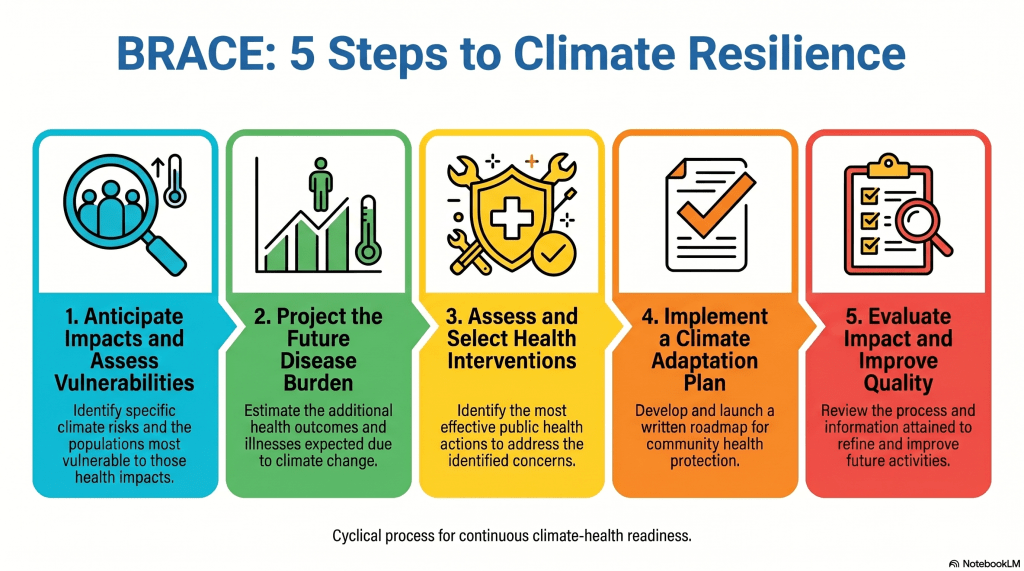
The CDC BRACE Framework for Climate Health Resilience
The CDC’s BRACE framework provides a systematic five-step process to integrate AI-enabled early warning systems to anticipate climate impacts and assess specific health vulnerabilities, such as neurological risks. This integration aligns with CDC priorities by enabling public health agencies to project climate-related disease burdens and implement data-driven adaptation plans to safeguard communities

 Sahar Zahid | Climate–Neurology Early Warning Framework